If you’re reading this, you might be curious about how your internet connection stacks up against the rest of the country. From bustling cities to quiet rural towns, internet speeds vary dramatically across the U.S. Fast, reliable internet has become essential for everyday life, shaping everything from how we work and learn to how we stream movies and connect with family.
This guide will break down the latest data on internet speeds in the United States. We’ll define key terms such as download and upload speeds, reveal the states with the fastest and slowest connections, identify the top Internet Service Providers (ISPs), and explore the factors that cause these large performance differences.
Key Takeaways: Fastest Internet Speeds in the U.S.
- Fastest State: Delaware leads the nation with an average download speed of 246.95 Mbps.
- Average Internet Speed in the U.S.: The U.S. median fixed broadband download speed is 308 Mbps as of early 2026.
- Slowest State: Idaho has the slowest average internet speed in the US at 124.57 Mbps.
- Fastest ISPs in the U.S.: Fiber providers like EarthLink Fiber, AT&T Fiber, and Google Fiber consistently deliver top speeds, with Xfinity being a leading cable provider.
National Internet Speed Ranking (Top 5):
- Delaware (246.95 Mbps)
- Maryland (238.26 Mbps)
- New Jersey (235.67 Mbps)
- Connecticut (233.88 Mbps)
- Florida (232.80 Mbps)
Key Trend: The continued expansion of fiber-optic networks is the primary driver of increased average internet speed in the US, particularly in coastal and southern states.
Understanding Internet Speed: Download vs. Upload
Before we dive into the rankings, it’s helpful to understand what we mean by “internet speed.” Speed is typically measured in megabits per second (Mbps) and broken down into two numbers:
- Download Speed: How quickly your device can retrieve data from the internet. It affects how fast websites load, videos stream, and files download.
- Upload Speed: How quickly your device can send data to the internet. It’s important for video calls, online gaming, and uploading large files.
For most people, download speed is the more critical number, which is why it’s the primary metric used in this report.
The Average Internet Speed in the U.S. (2026 Overview)
In 2026, the average internet speed in the US is 309 Mbps. This represents a 59% increase from the 2024 average of 196 Mbps. These averages are calculated using data from millions of speed tests conducted by users across the country. Reputable sources like the Federal Communications Commission (FCC), Ookla, and M-Lab collect and analyze this data to provide a clear picture of the nation’s connectivity.
Internet Speed Rankings by State
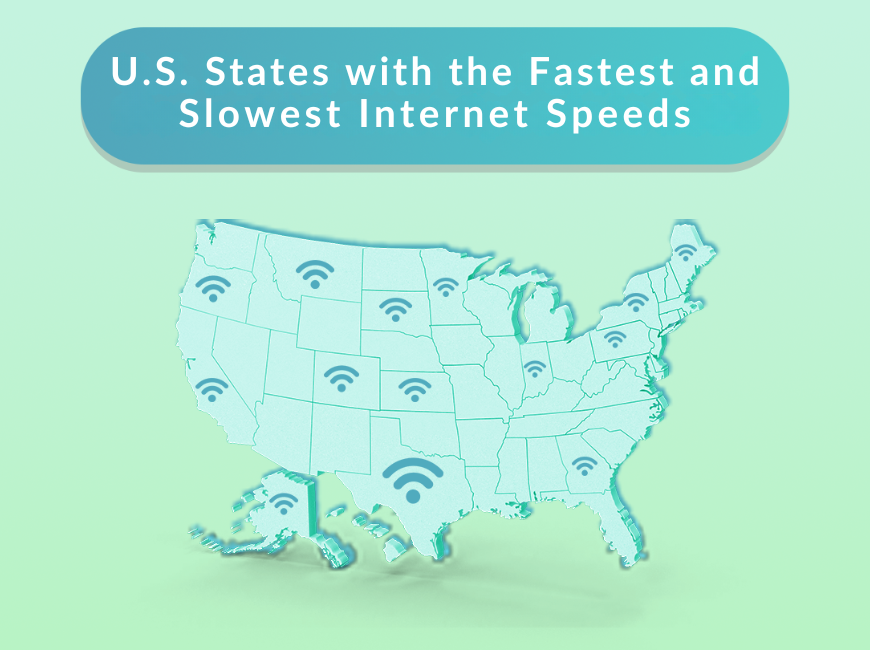
While the national average is rising, performance varies significantly from state to state. Below is a comprehensive table of internet speed rankings for all 50 states, highlighting the vast differences in digital infrastructure.
| Rank | State | Avg. Download Speed (Mbps) |
| 1 | Delaware | 246.95 |
| 2 | Maryland | 238.26 |
| 3 | New Jersey | 235.67 |
| 4 | Connecticut | 233.88 |
| 5 | Florida | 232.80 |
| 6 | Virginia | 230.49 |
| 7 | Rhode Island | 227.10 |
| 8 | Texas | 225.74 |
| 9 | California | 223.59 |
| 10 | Nevada | 220.91 |
| 11 | Colorado | 219.79 |
| 12 | Massachusetts | 218.54 |
| 13 | Utah | 218.06 |
| 14 | New Hampshire | 217.06 |
| 15 | Oklahoma | 216.91 |
| 16 | Oregon | 209.69 |
| 17 | New York | 208.05 |
| 18 | Indiana | 206.46 |
| 19 | Tennessee | 205.07 |
| 20 | Pennsylvania | 204.66 |
| 21 | Louisiana | 203.11 |
| 22 | Illinois | 201.12 |
| 23 | Washington | 201.11 |
| 24 | Arizona | 200.64 |
| 25 | South Carolina | 199.35 |
| 26 | North Carolina | 197.61 |
| 27 | Missouri | 196.43 |
| 28 | Georgia | 194.98 |
| 29 | Arkansas | 194.82 |
| 30 | Michigan | 193.19 |
| 31 | Alabama | 191.88 |
| 32 | Ohio | 188.20 |
| 33 | Mississippi | 187.07 |
| 34 | Kansas | 186.88 |
| 35 | Kentucky | 183.31 |
| 36 | Wisconsin | 183.11 |
| 37 | DC | 182.39 |
| 38 | Nebraska | 177.37 |
| 39 | New Mexico | 173.62 |
| 40 | Maine | 173.23 |
| 41 | North Dakota | 171.03 |
| 42 | Vermont | 166.40 |
| 43 | West Virginia | 164.85 |
| 44 | South Dakota | 164.71 |
| 45 | Minnesota | 164.68 |
| 46 | Iowa | 150.74 |
| 47 | Wyoming | 147.19 |
| 48 | Hawaii | 146.07 |
| 49 | Montana | 129.73 |
| 50 | Alaska | 125.09 |
| 51 | Idaho | 124.57 |
Source: HighSpeedOptions
TestMySpeed CTA banner, mint gradient background with a teal speedometer icon, an eyebrow line, a header about falling behind the national average, and two buttons: run a speed test and compare providers.
See which providers offer faster speeds at your address.
Falling behind the national average? Skip the test and see which providers offer faster speeds at your address.
The Fastest Internet Speeds in the U.S.
States with the fastest internet speed in the US are largely concentrated in the Northeast, where dense populations and strong competition among providers have fueled major infrastructure investments. These states benefit from extensive fiber optic networks, which deliver more reliable and faster connections than older cable or DSL technologies.
Top 5 States with the Fastest Internet:
| State | Avg. Download Speed (Mbps) | Most Common High-Speed Internet Type |
| Delaware | 246.95 | Fiber & Cable |
| Maryland | 238.26 | Fiber & Cable |
| New Jersey | 235.67 | Fiber & Cable |
| Connecticut | 233.88 | Fiber & Cable |
| Florida | 232.80 | Fiber & Cable |
The Slowest Internet Speeds in the U.S.
On the other end of the spectrum, states with slower speeds are often more rural and mountainous. The high cost of laying fiber optic cables and the smaller customer base in these regions make it difficult for providers to invest in new infrastructure. This digital divide highlights a significant challenge for remote work, education, and economic growth in these areas.
However, government programs like the BEAD Program are working to close this gap by funding broadband expansion in underserved communities.
5 States with the Slowest Internet:
| State | Avg. Download Speed (Mbps) | Most Common High-Speed Internet Type |
| Idaho | 124.57 | Cable & DSL |
| Alaska | 125.09 | Cable & Satellite |
| Montana | 129.73 | Cable & DSL |
| Hawaii | 146.07 | Cable & DSL |
| Wyoming | 147.19 | Cable & DSL |
What are the Fastest ISPs in the U.S.?
When it comes to providers, fiber optic internet is the undisputed king of speed. The fastest ISPs in the country leverage fiber technology to offer symmetrical download and upload speeds that can exceed 1,000 Mbps (1 Gbps).
- National Fiber Leaders: Google Fiber, EarthLink Fiber, and AT&T Fiber are consistently ranked among the fastest providers nationwide. Their pure fiber networks offer superior performance and reliability compared to other connection types.
- Top Cable Providers: While not as fast as fiber, cable internet from providers like Xfinity and Spectrum offers a widely available alternative with speeds that are more than enough for most households. Innovations like DOCSIS 4.0 technology are helping cable catch up, promising multi-gigabit speeds in the near future.
- The Rise of 5G Home Internet: 5G home internet from providers like T-Mobile and Verizon is becoming a viable alternative, especially in areas with limited wired options. While speeds can be less consistent than fiber or cable, it’s an important technology for expanding broadband access.
What Impacts Internet Speed by State?
The disparity in internet speeds across states is not random. Several key factors contribute to why one state might have blazing-fast connections while another lags behind:
- Fiber Availability: This is the single biggest factor. States with extensive fiber-to-the-home networks consistently have higher average speeds.
- Population Density: It’s more cost-effective for providers to build and maintain networks in densely populated urban areas than in sprawling rural regions.
- Competition and Investment: When multiple providers compete for customers in a market, it drives down prices and encourages investment in faster, better infrastructure.
- Geography and Terrain: Laying fiber-optic cables across mountains, vast deserts, or remote islands is incredibly challenging and expensive, slowing deployment in states with difficult terrain.
Want to see how your own connection measures up? You can use a free tool like TestMySpeed to check your personal internet speed and compare it to your state’s average.
What’s Next for U.S. Internet Speeds
The future of internet in the U.S. looks bright and fast. We can expect the internet speed ranking to continue shifting as several key developments unfold:
- Continued Fiber Expansion: With ongoing private investment and government funding, fiber networks will reach more communities, pushing the national average speed even higher.
- Closing the Rural Divide: Initiatives aimed at bringing high-speed internet to rural and underserved areas will begin to narrow the digital divide, improving speeds in states that currently lag.
- 5G Home Internet Growth: As the 5G network expands and matures, it will provide a competitive high-speed option for millions more Americans.
These trends suggest that by 2027, even more households will have access to the gigabit speeds needed to power our increasingly connected lives.
Frequently Asked Questions: Speeds by State
What is the average internet speed in the U.S. in 2026?
The average download speed in the U.S. is 309 Mbps as of early 2026. This is a significant increase over previous years, driven by the expansion of fiber-optic networks
Which state has the fastest internet speed in the U.S.?
Delaware has the fastest internet speed in the US, with an average download speed of 246.95 Mbps.
How can I check my internet speed and compare it to my state’s average?
You can use a free online speed test tool like TestMySpeed to measure your current download and upload speeds. You can then compare your results to the state averages listed in the table in this article.
Why is internet slower in some states?
Internet is slower in certain states primarily due to a lack of modern infrastructure, particularly fiber optic networks. Rural geography, low population density, and less competition among providers are major contributing factors.
What are the top 5 fastest ISPs in the U.S.?
While rankings can vary, the fastest ISPs are typically fiber providers. Google Fiber, EarthLink Fiber, AT&T Fiber, Verizon Fios, and Xfinity (as a top cable provider) are all considered among the fastest and most reliable options available.